
I got turtles recently. This isn’t related to the topic at all. But I wanted to tell you about it. Their names are Betsy and Tacy, and they are very small and very cute. I love them, and, surprise surprise, so does my husband. Turtles do very little, yet we find ourselves at the tank often, staring down at the small creatures. Watching a turtle is calming to my ever busy soul.
Anyway. On to the book review.
Rebecca by Daphne du Maurier.
A while ago I did a post about mirrors in fiction (you can find it here). Some characters hold up a mirror to my face, forcing me to confront a hidden character flaw, or funny habit. This was one of those books.
I related with Mrs. de Winter, the main character and narrator, a little too much for comfort. She is not exactly who I am now (I hope), but who I was at 21 years old, the same age as the character.
A little background, please. The story follows a 21 year old girl who is learning to be a ladies companion. She is currently a companion to an obnoxious old lady who is a gossip and a social climber. Her employer is vastly interested in anyone with a title, or money, and preferably both, much to the chagrin of the main character. Enter Mr. de Winter, a man with both. So of course, our hilariously obnoxious old lady tries every trick in the book to make his acquaintance, because this was before the days you could just walk up and introduce yourself. But, like any girls day dream, this handsome, rich, titled man from England is more interested in the main character than he is the old lady. Which we heartily approve of, though it leaves us with questions. Why her?
The main character is highly relatable, in that she is not poised, calm, or even good at social events. She is shy, prone to daydreams, and sometimes says the wrong thing. We love her, but why does Mr. de Winter? Why would a slightly older, rich man be interested in a working class girl who doesn’t know what to do at parties? The very first mystery of the book, of which there are many more.
Mysteries abound in the book, overlapping each other and compounding each other. Just as we are on the cusp of discovering the answer to one mystery another one rears its head. We are drawn from mystery to mystery, from discovery to discovery, along through the story until the very last page. No space is given for a conclusion. No cute little sentence to wrap everything up and give us a sense of a happily ever after, or sadly ever after. Nope, the plot hurtles along until the end, which this story can do, because the conclusion was already given at the beginning. The entire book is our main character, a little older and wiser, looking back on this part of her life. We already know how and where she ends up, the rest of the story is just getting us there. I found this stripped away any fluff at the end of the story, the final scene packs a punch, and then it ends. The ending has stuck with me months after I read it, almost more than any other scene of the book.
I found the characters to be interesting, varying from chilling and scary to sweet and kind. These characters felt larger than life, like almost real people, but a little bit extreme. I mean, do housekeepers really become so loyal? Not extreme in a bad way, more like accentuated characters, so who they were came across well. Book characters do well when they are accentuated like that. Real people are contradictory and confusing, there are simply not enough pages in a book to accurately represent real people. Even biographers have to focus on a couple of traits, or they would be writing forever (I know some biographers don’t, they instead focus on the whole person, and those books tend to be reaaaaally long, and very thorough). All this to say, I enjoyed the characters, and would happily have a cup of tea with them!
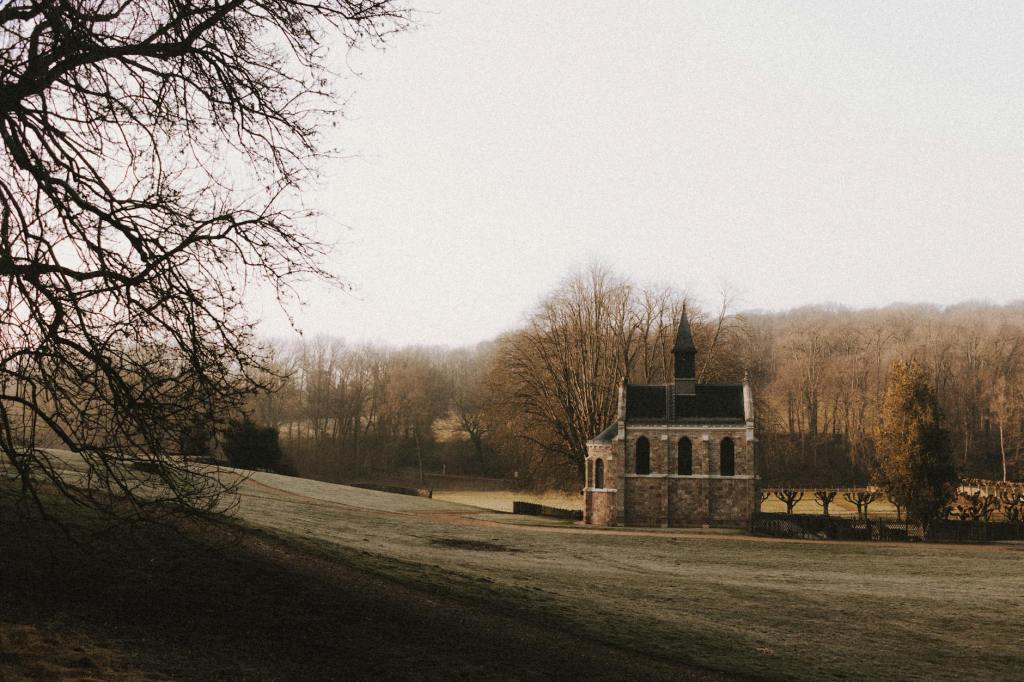
The first thing that struck me about this book was the atmosphere of the setting. Every place has a distinct feel in the book, and is described in certain ways. Our setting at the beginning of the book is described as bright and hot in various ways, a few different times. The repetition of the descriptors helps make the places in the book come alive. Especially Manderly, the place where most of the book is set. Manderly is described so much, and so well, I can see it in my minds eye better than the side characters. The place almost becomes a character in and of itself, a being with moods and a personality.
All in all, I enjoyed this book immensely, and I highly recommend it to anyone looking for a mysterious, suspenseful read. However, I was misled by the description, and the hype, into thinking there were ghosts. There were no ghosts, not a solitary one, and I am a little disappointed…
Shaina Merrick



 The Beauty of a Story